
In the global effort against climate change, small and medium-sized enterprises (SMEs) play a pivotal role. While large corporations often take centre stage in discussions about emissions reduction, SMEs collectively constitute a significant portion of global emissions. As a result, setting meaningful emissions targets is essential for these businesses to contribute to a sustainable future.
A net zero target refers to the commitment of an organisation to eliminate the majority of its emissions and compensate for the remaining, unpreventable emissions using offsets or carbon credits (typically used interchangeably).
Once a company has reduced their emissions and purchased a sufficient amount of carbon credits to offset the remaining amount, they will achieve net zero emissions – the amount of greenhouse gases they are taking out of the atmosphere cancels out those they are producing. Being net zero doesn’t mean all emissions are being prevented, but the focus should be on getting as close to ‘gross zero’ emissions as possible. High-quality carbon offsets are then used for any unavoidable emissions.
Science-Based Targets, or SBTi targets, are a specific subset of emissions targets that are backed by rigorous scientific analysis. These targets are considered highly credible and are in line with the latest climate science. To establish an SBTi target, SMEs must follow a precise methodology outlined by the Science-Based Targets initiative (SBTi). These targets involve reducing emissions in line with keeping global warming well below 2°C above pre-industrial levels. SBTi targets are becoming increasingly popular among organisations of all sizes due to their robust methodology and alignment with global climate goals.
While SBTi targets are an excellent choice for organisations that want to demonstrate their commitment to addressing climate change rigorously, they may not be suitable for every SME. The decision to adopt an SBTi-aligned target should be based on your specific circumstances, including your industry, size, and available resources. SMEs may consider the following factors:
Apart from SBTi-aligned targets, SMEs can consider various other emissions targets, including:
For some more info on emissions targets and SBTi, feel free to check out our target setting blog post, and please reach out if you’re keen to see how Trace may be able to help your business set an appropriate target. Get in contact with our team to find out more.
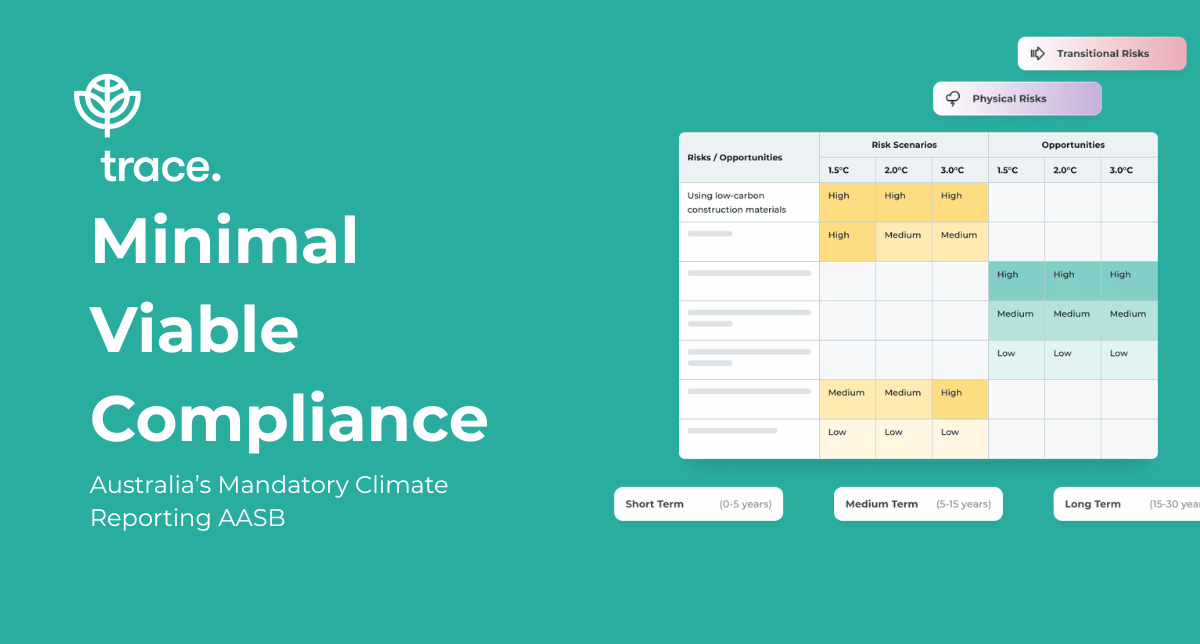
A one-page visual of the four AASB S2 pillars, what each requires, key deadlines, and the step-by-step compliance path. Start here if your team is scoping what ASRS S2 actually involves.
Benchmark your readiness against 20+ ASRS compliant Australian companies. Includes buying criteria, support gaps, and how first-round filers are approaching year one.
Templates, checklists and frameworks to start your AASB S2 implementation. Built for finance and sustainability leads who are ready to move.
A 5-minute self-assessment. Get a compliance gap map and personalised next steps, scored against the four AASB S2 pillars.
.png)
Trace works with businesses at every stage of their mandatory reporting journey, from first emissions measurement to audit-ready ASRS S2 disclosure. Talk to our team to see how we can help.


London - Sydney


.png)
.png)
.webp)