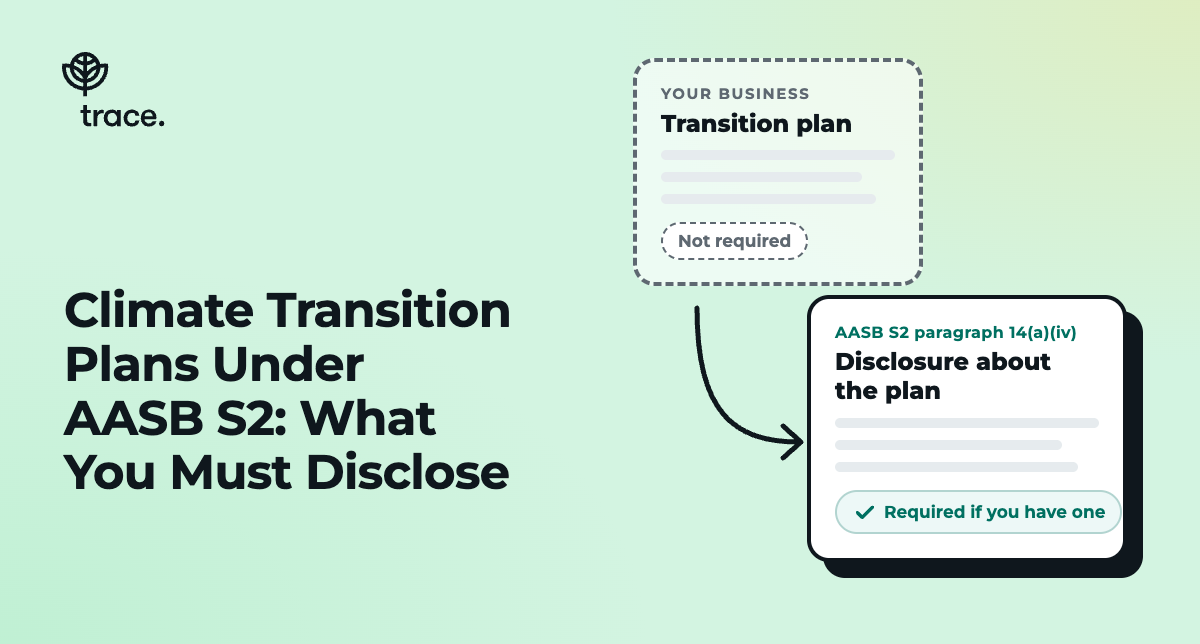
A climate transition plan sets out an entity's targets, actions or resources for moving to a lower-carbon economy. AASB S2 does not require an entity to have one. Instead, paragraph 14(a)(iv) requires disclosure about any plan it has, including key assumptions and dependencies. Treasury's August 2026 guidance on how to plan is voluntary.
AASB S2 defines a climate-related transition plan as "an aspect of an entity's overall strategy that lays out the entity's targets, actions or resources for its transition towards a lower-carbon economy". In plain words, it is how the business intends to move towards a lower-carbon economy. It is part of strategy, so it need not be a standalone document.
"Transition" means the shift to a lower-carbon economy. According to Treasury, transition risks "arise from efforts to transition to a lower-carbon economy including policy, legal, technological, market and reputational risks". Physical risks, by contrast, come from climate change itself, either event-driven (acute) or from longer-term shifts in climate patterns (chronic). Our page on physical and transition risk compares the two.
The Australian Accounting Standards Board (AASB) calls a transition plan "the outcome of the transition planning process". Treasury, meanwhile, describes planning as an "ongoing, internal strategic process". Its scope is wider than the AASB S2 definition, because it covers climate-related risks and opportunities generally, physical risk included.
No. AASB S2 is a disclosure standard: it sets what to report, not how to run a business. In the AASB's words, it "does not require an entity to have a transition plan, nor does it require an entity to publish a transition plan if one exists". It requires information about any plan the entity has.
The standard in full is the Australian Sustainability Reporting Standard AASB S2 Climate-related Disclosures, part of the ASRS. Our guide to AASB S2 covers the rest of it.
Treasury says the same from the side of the law. Entities reporting under Chapter 2M of the Corporations Act 2001 "are not required to prepare transition plans. However, they may be required to disclose certain information about their transition plan if they have already developed one."
Myth: you need a climate transition plan to comply. Reality: according to the AASB and Treasury, transition plans under ASRS are disclosed where they exist, not required. So having no plan is not a gap in compliance. It is a fact to state accurately.
Under paragraph 14(a)(iv), you disclose information about the plan, including the key assumptions used to develop it and the dependencies it relies on. Paragraph 14(b) adds how those activities are resourced, and paragraph 14(c) adds progress on plans disclosed in earlier periods. The plan document itself need not be published.
The AASB puts it plainly: AASB S2 "requires an entity to provide information about the entity's strategy to meet its transition plan if it has one", not the plan itself.
Its educational material also gives examples of what an entity might find relevant, as illustrations rather than a required list. Assumptions might cover policy and regulatory action, the speed of grid decarbonisation or the cost of borrowing. Dependencies might include the workforce, water availability or an emission removal technology. As an illustrative example of our own, a distributor planning an electric fleet might record an assumption about grid decarbonisation and a dependency on charging infrastructure.
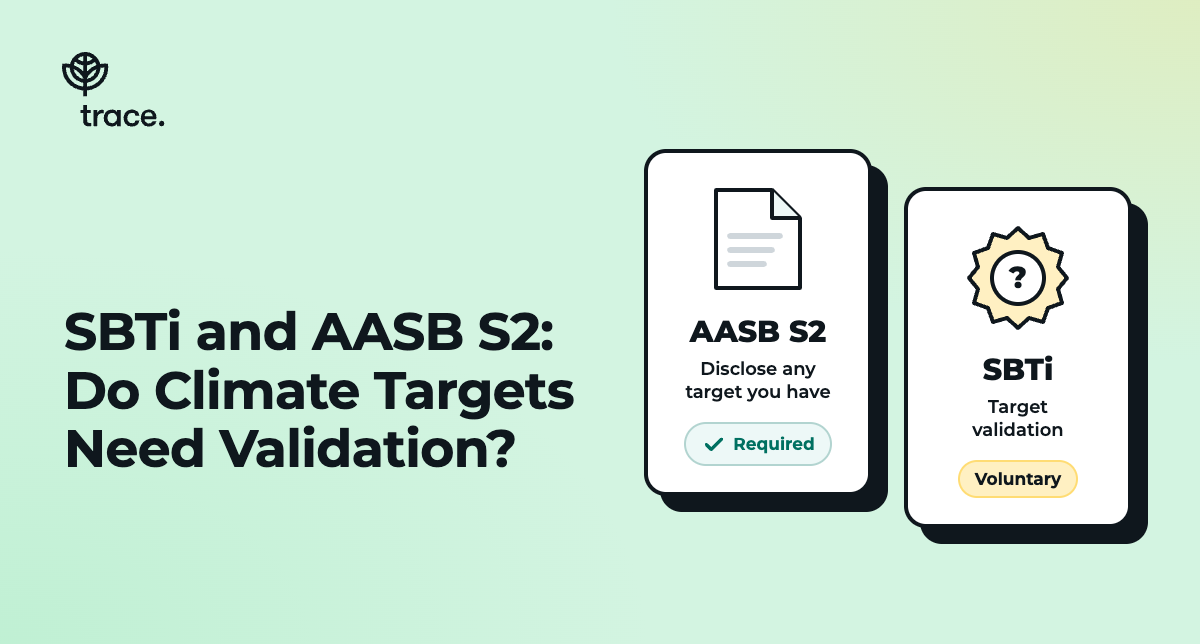
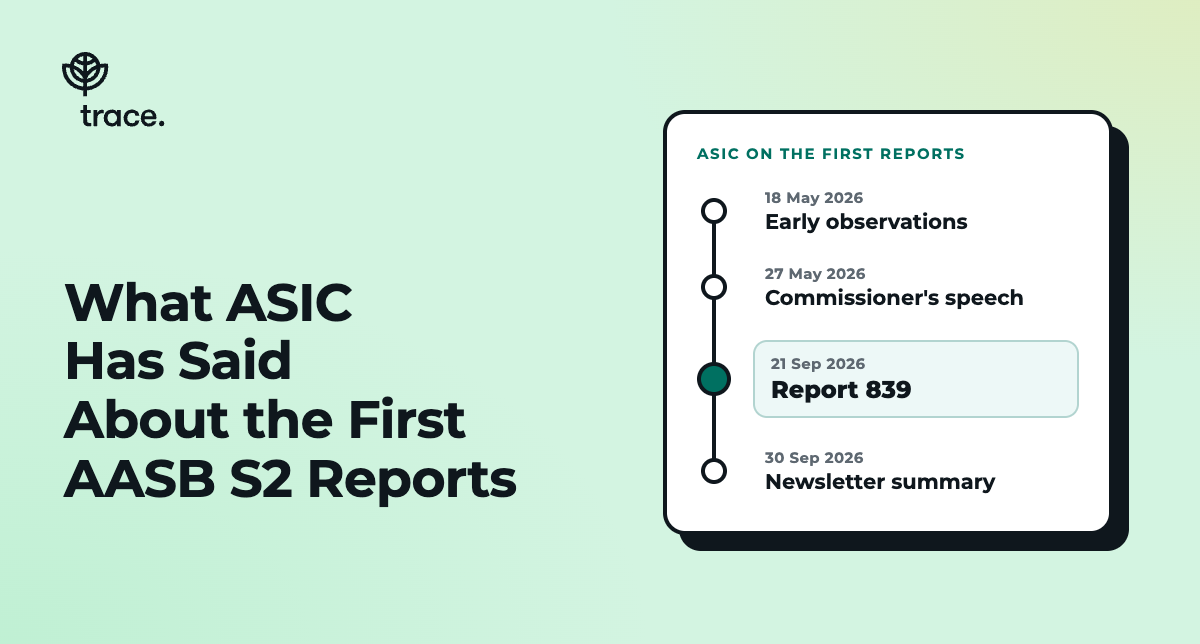
Paragraph 14(a)(v) asks how the entity plans to achieve any climate-related targets, described under paragraphs 33 to 36. Those include targets it must meet by law or regulation. According to ASIC's Report 839, 55% of the 40 reports in its sample provided information about a target of some kind.
An entity may also cross-refer to a separately published plan. However, the AASB's material says the referenced information must be available on the same terms and at the same time as the disclosure, and the reference must be precise. That route has a liability catch, covered below.
You still answer paragraph 14. You disclose how the entity has responded, and plans to respond, to its climate-related risks and opportunities. That includes changes to its business model, its mitigation and adaptation efforts, and how the work is resourced. You do not need to invent a plan to fill the heading.
The AASB's material describes two cases. An entity with a strategic goal but no formal plan gives information about "its approach to climate-related transition in the absence of a formal transition plan". An entity with a formal plan says so, and describes it with its assumptions and dependencies.
The definition covers "targets, actions or resources", and nothing read for this article settles whether a bare target counts. So the judgement is yours to make and to document. Check these places first:
The question matters for assurance too. The AUASB's ASSA 5010 says that where an entity does not intend to disclose a transition plan or target, "assurance work in the first instance concerns whether the entity has a transition plan or target to be disclosed".
What this means for you: decide, and record why. A statement that the entity has no transition plan should be a conclusion you can support, not a throwaway line.
Treasury published Climate-related transition planning: Voluntary Guidance on 24 August 2026. It describes good practice for planning in four stages. Plans need not align with it, and Treasury says the guidance "has not been developed to inform disclosures required under Chapter 2M of the Corporations Act". In short, it is about planning, not reporting.
The guidance builds on the Transition Plan Taskforce (TPT) Transition Planning Cycle. Its four stages are:
Treasury stresses that planning "is not a linear process". For the disclosure itself, the closer reference is the AASB's July 2026 educational material, which "does not add to or change the requirements in the Standard".
What it is
Status
Issued by
What it asks of you
Where to read more
Based on Commonwealth of Australia data and AASB material.
Treasury sets three approaches by climate risk exposure and complexity. The lightest, "Focus on fundamentals", suits low exposure and low complexity. It means "a credible, principles-aligned climate narrative that articulates ambition and clearly signals intent for action".
Treasury's illustrative service-sector organisation works at that level, using "high-level judgement" and "a small number of practical early actions", such as office energy efficiency. That example is about planning, though. It does not change the scenario analysis (testing strategy against plausible climate futures) that AASB S2 paragraph 22 requires.
Treasury also warns that targets which are "overly vague, unsubstantiated or lacking clear assumptions" may not be seen as credible, and "in some circumstances they could be considered misleading".
Under ASSA 5010, transition plan disclosures have no assurance in year one, are reviewed in years two and three, and are audited from year four, a step Treasury is consulting on. ASIC says statements about them made in the sustainability report to comply with the standard have modified liability for financial years commencing 1 January 2025 to 31 December 2027.
ASSA 5010, from the Auditing and Assurance Standards Board (AUASB), shows "None" for transition plans in year one. Years two and three bring limited assurance, which is a review, and year four onwards reasonable assurance, which is an audit. For a Group 2 entity, year two is the financial year commencing between 1 July 2027 and 30 June 2028. In Strategy, year one covers only AASB S2 subparagraphs 9(a), 10(a) and 10(b).
That is the timeline today. Treasury's August 2026 efficiency consultation includes options to keep limited assurance permanently or to delay reasonable assurance until 2035, so the year-four step may change.
According to ASIC Regulatory Guide 280 (RG 280), modified liability settings apply, in specific circumstances, to statements about Scope 3 emissions (the indirect emissions in a value chain), scenario analysis and transition plans. They cover financial years commencing 1 January 2025 to 31 December 2027. Under RG 280.61, only criminal action or action by ASIC can be brought over a protected statement.
The window is set by the calendar. As an illustrative example, a Group 2 entity with a 30 June year end has its years starting 1 July 2026 and 1 July 2027 inside it, but not its year starting 1 July 2028.
RG 280 sets limits, and three matter here. Only statements made to comply with the standards are covered (RG 280.66). A statement made voluntarily outside the report, such as in an investor presentation, is not (RG 280.69(a)). Nor is a statement "included by cross-reference in the sustainability report" (RG 280.69(b)).
On our reading of RG 280.69, a standalone transition plan on a website, cross-referred to from the report, therefore does not carry the report's protection. ASIC also says forward-looking climate information "should be based on reasonable grounds". Our page on director liability under ASRS covers the board's side.
It is a business decision, not a compliance step. Treasury lists good reasons to plan, including responding to climate risks and meeting lender or investor expectations. However, once a plan exists, information about it must be disclosed each year with progress. From the second reporting year, that disclosure is also reviewed.
A lender or customer asking, or a public target that needs a path behind it, are practical triggers. Against that, a plan brings continuing disclosure under paragraph 14(c), and an ambition without substance is a credibility risk.
Some organisations need more. Treasury notes that for some sectors, planning "will require more complex or different approaches not covered in the guidance". It names hard-to-abate sectors and financial institutions among them.
At Trace, we call our approach Minimum Viable Compliance: meeting the letter and intent of ASRS without gold-plating, and concentrating effort where it is material and audit-ready. It is a deliberate choice, not the cheap option. Our guide to Minimum Viable Compliance in year one sets it out.
Trace is a climate disclosure platform with a specialist advisory team. Transition Planning and Disclosure Preparation are two of our six ASRS workstreams, and our page on AASB S2 disclosure support has more detail.
Trace suits mid-sized Australian organisations, mostly in Group 2, with no dedicated sustainability team that want a proportionate result from software plus specialists. However, an asset-heavy organisation needing bespoke physical-asset or financed-emissions modelling may be better served elsewhere. So may a large sustainability team wanting a broad strategic change programme, or a team that wants software only or a consultancy only.
As at 12 November 2026, two things are moving. The Treasury Laws Amendment (Financial Reporting System Reform) Act 2026 replaces the AASB, the AUASB and the Financial Reporting Council with one body, External Reporting Australia, from 1 December 2026.
Treasury's August 2026 consultation on climate disclosure efficiency asks, among other things, whether to keep limited assurance permanently or delay reasonable assurance until 2035. Either would change the year-four audit described above. Treasury says the changes it is considering "will not impact those reporting for the 2026-27 financial year".
Under the AASB S2 definition, a climate transition plan lays out an entity's targets, actions or resources for its transition towards a lower-carbon economy. Treasury's voluntary guidance builds one in four stages: assess your position, set strategic ambitions, plan actions, then implement them. The disclosure adds the key assumptions and dependencies the plan relies on.
Treasury describes climate transition planning as an ongoing, internal strategic process for identifying, assessing and responding to climate-related risks and opportunities, and for delivering on any climate ambitions. The AASB calls a transition plan the outcome of that process. Planning is voluntary in Australia, but a reporting entity must disclose information about any plan it has.
No. AASB S2 does not require an entity to have a transition plan, or to publish one if it exists. Paragraph 14(a)(iv) requires information about any plan the entity has, including key assumptions and dependencies. With or without a plan, paragraph 14 still asks how the entity is responding to its climate-related risks and opportunities.
No. Treasury's Climate-related transition planning: Voluntary Guidance, published on 24 August 2026, is voluntary, and Treasury says there is no obligation for transition plans to align with it. It also says it was not developed to inform AASB S2 disclosures. For what to disclose, the AASB's July 2026 educational material is the closer reference.
No. Under the AUASB's ASSA 5010, transition plans have no assurance in year one. They are reviewed (limited assurance) in years two and three, and audited (reasonable assurance) from year four, a step Treasury is consulting on. For a Group 2 entity, year two is the financial year commencing between 1 July 2027 and 30 June 2028.
Trace is a climate reporting platform with in-house specialists, founded in 2020 with offices in Sydney and London. It helps Australian organisations measure emissions and prepare AASB S2 climate disclosures.
Reviewed by Joanna Auburn, Co-founder and Chief Product Officer of Trace.
This article is general information about Australian climate reporting requirements as at the date shown. It is not legal, accounting or assurance advice.
All read on 12 November 2026 and checked again against the documents on 13 November 2026.


London - Sydney