
.png)
When fifteen CFOs, Chief Sustainability Officers, and Chief Risk Officers sit down at the same table, and every single registered guest shows up, it's a sign that something important is being discussed.
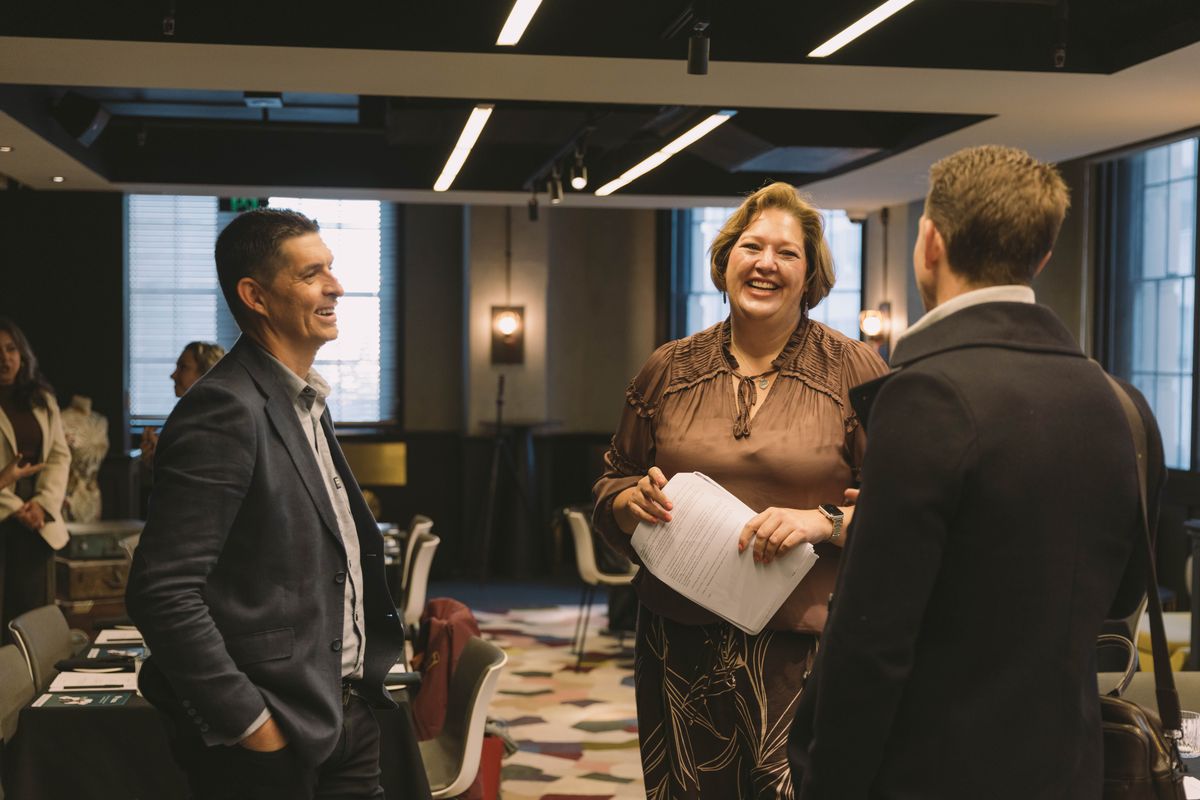
That's exactly what happened at our Sydney ASRS Breakfast in October 2025, with guest speaker Andrew Rigele, Partner & Head of ESG at Grant Thornton. Representatives from companies including Temple & Webster, The Iconic, Merivale, Sky News, IVE Group, Wotton Kearney, Eucalyptus, Shippit, Fresh Produce Group, and Comms Group came together over breakfast on an outdoor garden terrace for an honest, peer-to-peer conversation about what ASRS compliance actually looks like in year one.
Here are the six insights that shaped the morning.
The first half of the conversation kept returning to one theme: doing less, more credibly.
The pressure to produce a polished, comprehensive climate disclosure is real, but for year one, it's the wrong goal. The room aligned quickly: the most important thing is to be able to defend every number and every narrative in your report.
Andrew Rigele and the Grant Thornton team were direct: auditors aren't looking for perfection. They're looking for evidence of a rigorous, good-faith process with documented assumptions, clear methodology, and a consistent approach. Start there before you try to do more.
If there was a single piece of advice that resonated most strongly across the room, it was this: don't try to reconstruct your audit trail at the end. By then it's too late.
The organisations furthest ahead in their ASRS journey shared one habit in common. They treated every data decision, assumption change, and methodology choice as documentation-worthy from day one. That discipline looks like extra effort in the moment. When the auditors arrive, it saves significant time and stress.
Scope 3 emissions remain the most contested part of any climate disclosure, and for good reason. The data is difficult to source, methodologies vary widely, and estimation error is real.
Rather than obscuring this uncertainty, the conversation pointed clearly to transparency as the right approach. Be explicit about data sources, estimation methods, and the confidence levels you can genuinely assign to each category. Auditors and informed stakeholders will respect clarity about limitations far more than false precision.
The second half of the conversation shifted from technical disclosure questions to the organisational and governance structures needed to make ASRS compliance sustainable over time.
One of the sharper observations of the morning: ASRS disclosures live in statutory documents, not sustainability reports. The two serve different purposes, different audiences, and operate under different regulatory frameworks.
Conflating them, or trying to make your ASRS disclosure do double duty as a sustainability story, creates confusion for auditors, investors, and readers alike. Keep them clearly separated and be deliberate about which document does what.
Climate scenario analysis does not need to model every conceivable future. What it needs to be is credible, internally consistent, and directly connected to how your business actually thinks about risk and long-term planning.
The group cautioned against building elaborate scenario models that don't reflect how the organisation operates in practice. Simpler is better, provided it's defensible and tied to real strategic decisions that leadership can stand behind.
Perhaps the most important insight of the morning: ASRS compliance is not primarily a reporting exercise. It's a governance exercise.
Organisations that treat it as a project for the finance and ESG teams will find themselves underprepared. The companies furthest ahead were those that had already brought their risk committees, audit committees, and boards into the process. Not to tick a box, but because boards genuinely need to understand and ultimately sign off on climate risk disclosures. Don't wait until the disclosure is drafted to start those conversations.
At Trace, we've developed a framework we call Minimum Viable Compliance: the structured, defensible foundation that every Group 1, 2, and 3 entity needs before adding complexity.
What the morning reinforced is that the fundamentals matter most in year one. A clear emissions boundary, a documented methodology, transparent assumptions around Scope 3, and a governance structure that can credibly stand behind the numbers. Getting those foundations right is far more valuable than a comprehensive disclosure that can't withstand audit scrutiny.
Andrew Rigele and the Grant Thornton team brought an auditor's lens to the conversation: practical, grounded, and focused on what actually holds up under scrutiny. Their work across mid-to-large Australian organisations gives them a unique vantage point on where companies are struggling, where the common pitfalls lie, and what first-year compliance realistically looks like from the assurance side.
We're grateful for their involvement in making this conversation as useful and direct as it was.
Our ASRS Breakfast Club series brings together senior finance and ESG leaders for honest, peer-to-peer conversations on climate compliance. No fluff, no sales pitches, just the conversations that actually move things forward.
Get in touch with the Trace team to express interest in our next event, or explore our Minimum Viable Compliance toolkit to start building your foundation today.


London - Sydney
.png)



.png)
.png)
.png)