Regulation

Tuesday, 24 March 2026 | Private Dining Room, Inchcolm Hotel, Brisbane
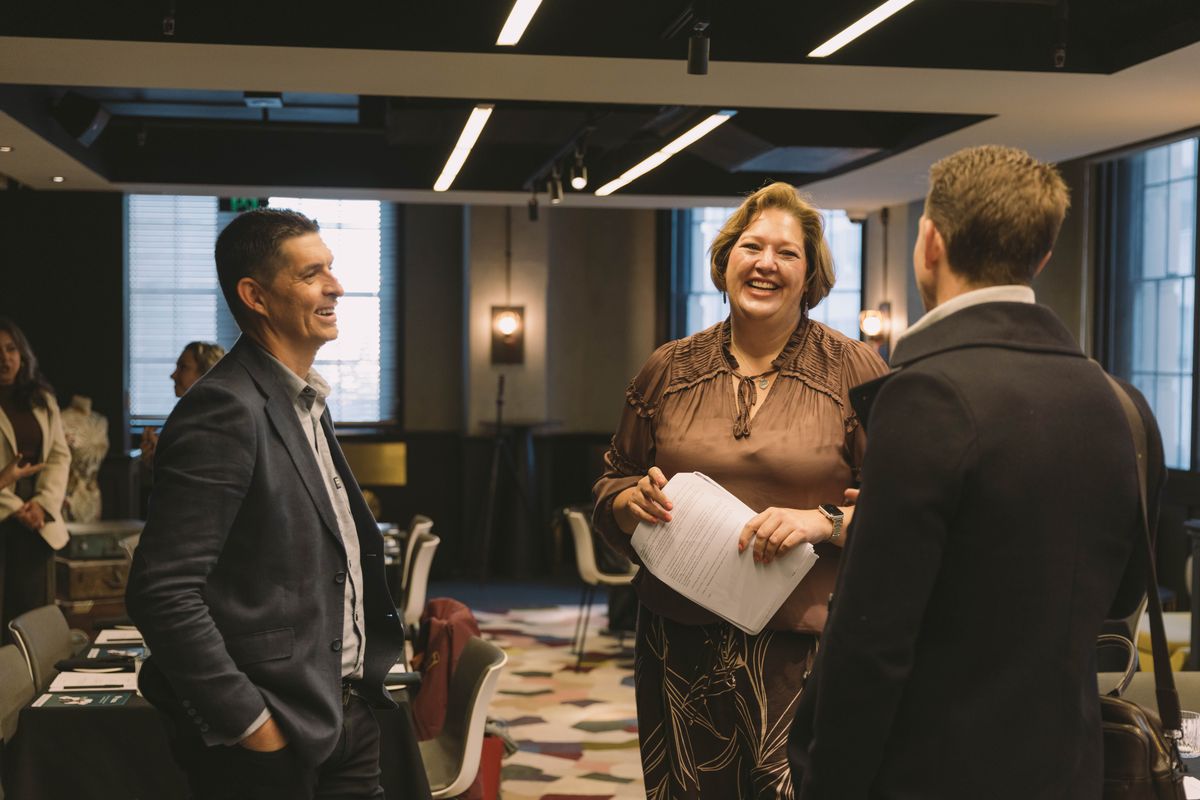
We gathered 25 senior leaders from finance, risk, and compliance in the private dining room at the Inchcolm Hotel in Brisbane yesterday morning for an intimate breakfast conversation about mandatory climate reporting. No slides. No sales pitches. Just an honest discussion about what it actually takes to get across the line.
Our host, John Claridge (Head of Growth, Trace), was joined by two people with something rare to offer the room: Lorelei Nieves, CFO of SEE Group, a Group 1 entity who is already deep in the disclosure process, and Rachael Brock, Trace's ASRS Expert and Lead Consultant, formerly of KPMG's climate assurance practice. Together, they gave the room a candid, practical view of what mandatory climate reporting looks like from the inside.
Here's what came out of the conversation.
Lorelei shared a moment of honesty that clearly landed with the room. For SEE Group, the decision to start early wasn't driven by enthusiasm for sustainability reporting, but by a clear-eyed read of the calendar. Stacking mandatory climate disclosure on top of the financial year-end reporting cycle felt like a risk she wasn't willing to take.
So they got ahead of it. SEE Group had already been measuring their emissions with Trace for three years, and had a sustainability committee in place from their voluntary disclosure work. But Lorelei was quick to point out that the move to mandatory ASRS reporting represented something fundamentally different, not just more of the same.
"This is a fundamental change in reporting," she told the room. "I wanted to be across it early."
That instinct to treat ASRS compliance as a new discipline rather than an extension of existing sustainability work set the tone for much of the conversation that followed.
One of the clearest messages from both Lorelei and Rachael was the importance of being deliberate about what Year One actually needs to be. Many organisations Rachael works with are either leaving it too late or, counterintuitively, overbuilding — trying to produce a strategic, polished document when what's actually required is an accurate, defensible one.
The numbers tell the story: first-round disclosures from comparable entities are running 30 to 40 pages. Lorelei is working toward an 8-page report. Compliance first. The bells and whistles can come later.
Rachael framed this as Trace’s "Minimum Viable Compliance" (MVC) approach. MVC is a deliberate scoping exercise. Before you can get there, she argued, you need to answer a more fundamental question: where do you want to disclose, and why? Particularly for organisations in high-emission industries, a climate disclosure is also a public statement. Knowing that early shapes how you approach it.
For organisations that are Group 2 or 3 and not yet required, Rachael had a clear recommendation: do a dry run in Year 1. Use the preparation time to understand what the process actually involves before you're on the clock.
One of the most practical moments in the session came when Lorelei was asked where her team had spent the most time. The answer surprised some in the room.
It wasn't governance. It wasn't climate risk. It was project ledgers.
SEE Group's emissions data traces back through invoices attached to project ledgers, which then roll up to the general ledger. Getting that data clean, complete, and attributable took real effort — and it was a reminder that climate reporting is as much a data infrastructure challenge as it is a disclosure one.
Rachael noted that this kind of discovery is common. Organisations often assume they know where the pain points will be, and they're frequently wrong.
Efficiency was a recurring theme, and the AI discussion drew particular attention. Lorelei shared that a climate risk assessment that previously took 13 weeks now takes 2 with Trace's AI tooling. That's not a marginal improvement — it's a structural change in what's possible.
But both Lorelei and Rachael were careful not to oversell it. AI streamlines and reduces cost, but the human layer remains essential. Someone still needs to own the judgement, understand the context, and stand behind the numbers. The technology accelerates the work; it doesn't replace the expertise.
The audit conversation was one of the most practically useful parts of the morning. A few things stood out.
Rachael was direct: ASIC isn't scrutinising the quality of Year One disclosures — they're looking at accuracy. And accuracy is tied back to audit. That means the bar isn't "impressive"; it's "defensible."
The principles that matter are transparency, accuracy, and evidence. If you don't have the evidence, don't make the claim. Governance controls introduced late in the process will look strange. Meeting minutes matter. Everything needs a paper trail.
Lorelei's experience with her auditor, Grant Thornton, illustrated the importance of planning ahead. Her timeline: draft report to auditors by April, feedback in May, draft emissions report in July. That cadence only works because she started building toward it early and because she understood that doing the substantive report work at the front end, rather than the back end, is what makes the timeline manageable.
Several voices in the room echoed what was said at a recent EY event with AASB: talk to your auditor early. Every auditor has a different risk appetite by industry, and the sooner you understand theirs, the better you can calibrate your disclosure.
Something that came through clearly in Lorelei's account of the SEE Group journey was that she wasn't just trying to produce a report, she was trying to build a team that understood what they were doing and why.
"Knowledge is power," she said, describing how she'd deliberately invested in building internal capability rather than outsourcing the thinking. SEE Group had champions inside the business who were genuinely motivated to engage with sustainability, and she'd leaned into that, standing up a sustainability committee and creating real ownership rather than just process compliance.
That people-centred approach also shaped how she selected a partner. Trace's software capability was a decisive factor, but so was the way the engagement was structured — building skills alongside delivering outputs, rather than simply taking the work off her hands.
For the finance leaders in the room, the morning offered something hard to get from a webinar or a white paper: the unfiltered perspective of someone who is living through mandatory climate reporting right now, alongside the structured expertise of someone who has seen dozens of organisations navigate it.
The consistent thread across all of it was preparation — not because climate disclosure is impossibly complex, but because the timeline doesn't forgive those who start late. Draft the governance sections early. Talk to your auditor before you think you need to. Get the data infrastructure right before you start writing. Do a dry run if you have the time.
And if you're still figuring out what on earth all of this means? You're in good company. That was the most popular hand in the room.
Interested in understanding what mandatory climate reporting looks like for your organisation?
Get in touch with the Trace team.


London - Sydney



.png)
.png)