
"The best thing about working with Trace has been the relief and the trust that it's built in the whole process, which is just gold."
Thursday, 13 August 2026 | The Market Room, QT Hotel, Sydney
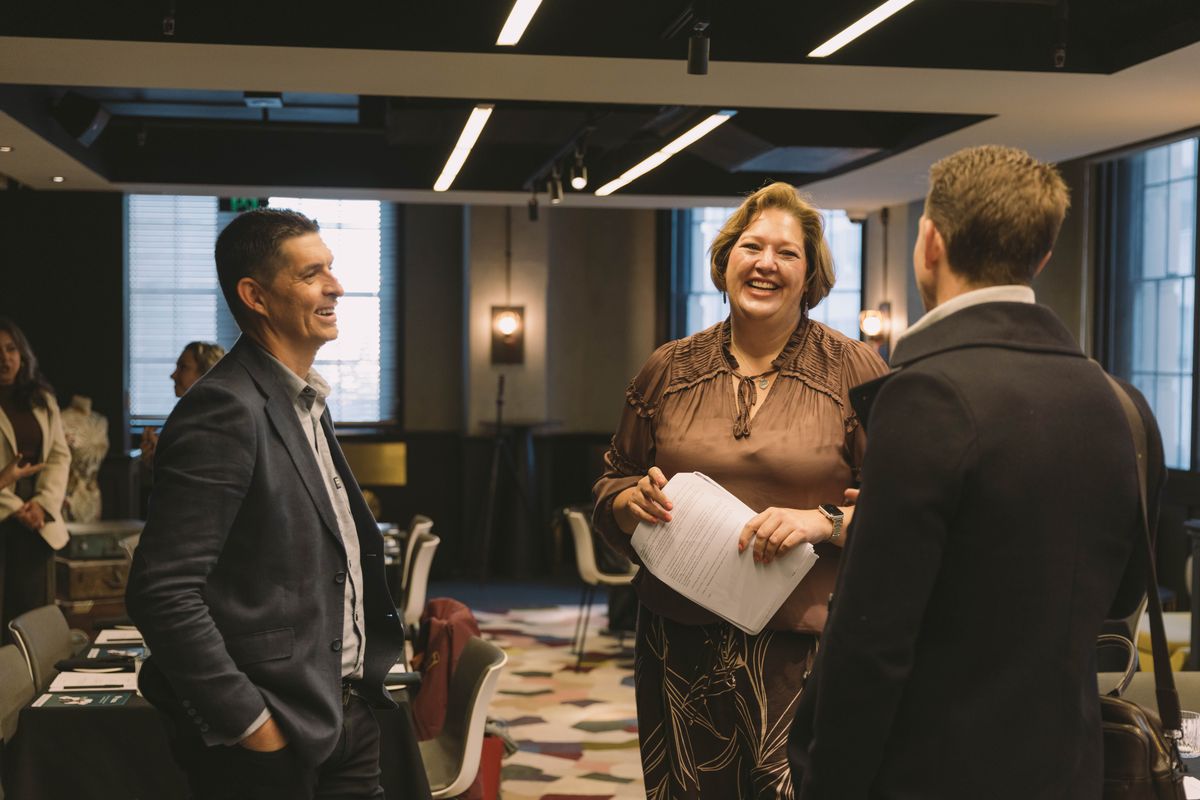
We gathered 27 people in the historic Market Room at the QT Hotel in Sydney for breakfast and an open conversation about what mandatory climate reporting actually takes. Senior leaders across finance, risk, compliance, legal and sustainability were all represented, and so were all three reporting groups: Group 1 businesses already deep in their first assurance cycle, Group 2 businesses working out where to start, and Group 3 businesses trying to understand what is coming.
Our guest speakers were Tom Nisevic, CFO at Metro Trains Sydney (MTS), who has just taken a Group 1 organisation through its first ASRS reporting cycle, and Rene Muller, Audit Partner at SW Accountants & Advisors, who has spent the last four years on the assurance side of the same work. One person who has lived it once, and one who has now watched dozens of organisations attempt it.
Start with governance, evidence everything, and do what the standard actually requires rather than what looks impressive.
The insights from the session were considerably more practical and candid than anything you will read in an annual report. We have summarised the eight things that stood out.
Australia's mandatory climate reporting regime is the largest change to corporate reporting in a generation. Treasury has estimated implementation costs of between $750,000 and $1.6 million per organisation, and the standards run to more than 260 pages. The work lands on finance, risk, legal, operations and sustainability at the same time, which is precisely why it stalls: no single function owns it outright, and most organisations have no reference point for what a defensible Year 1 disclosure looks like.
Group 1 reporters are now finding out. Their disclosures are in front of auditors, and the questions coming back are not the ones most teams prepared for. Group 2 and Group 3 businesses have the rare advantage of being able to watch that happen before their own deadline arrives.
The question the room came to answer: how much is actually enough, and how do we do this without it consuming the finance team?
A number of people in the room echoed the same problem. They know roughly what needs doing and cannot get the organisation behind it. A finance manager at a mid-sized engineering consultancy, a senior finance manager at a Group 2 lender and several others still deciding where to begin all described the same stall: no mandate, no budget, no owner.
Rene's answer was structural. Buy-in has to run from the directors down, with roles and responsibilities clearly defined so everybody knows what they hold.
"The number one thing I would do is make sure that you have buy-in from everyone across the organisation." Rene Muller, SW Accountants & Advisors
The framing matters just as much. This is a compliance obligation, not an optional report. When directors hear minimum viable compliance rather than a costly sustainability programme, the conversation changes, because you are describing a defined obligation with a defined end point instead of an open-ended project.
"Working with Trace brought the relief and the trust that it's built in the whole process, which is just gold." Tom Nisevic, Metro Trains Sydney
Rene could not have been clearer. If your report states that directors meet quarterly to discuss climate risk, that has to exist as an agenda item and be minuted. If it states that the board has been trained, there need to be training records. The governance section is fully within the scope of assurance, so everything in it needs support behind it.
Companies have consistently been surprised by the depth of evidence requested. Tom's audit partner put the same point to him plainly: whatever you disclose, make sure you can back it up. One Group 1 attendee in the room described their current state honestly, which was emissions work sitting in a Word document with a folder of supporting files alongside it, not yet reviewed by their auditor. That is a common position and a fragile one, because the audit trail lives separately from the disclosure it supports.
Tom was direct about the cost of doing otherwise. He has a small finance team and the work landed on him personally, taking a significant amount of his time. He assessed four providers and also modelled hiring a dedicated internal resource. His warning about what he was shown: "They sell you the dream and a 3 year plan, which would be a lot more expensive over time."
"Having an external party come in and provide almost like an independent assessment of what we've gone through really added a lot of gravitas to what we're actually doing." Tom Nisevic, Metro Trains Sydney
The test he now applies, and the one worth borrowing, is whether a partner is scoped to what compliance actually requires or is quietly selling a maturity journey well beyond it. Understand the minimum you are obliged to produce, then find a partner who will deliver that credibly rather than everything they can think of. A Group 3 head of finance at a property group made the related point that their deciding factor was cultural fit and how a partner works alongside a small team, not the length of the feature list.
Tom's hindsight on his own Year 1 was that the heavy effort was governance, documentation and audit evidence, not emissions calculation.
"A lot of companies have been surprised at the level of evidence that the auditors are asking for." Rene Muller, SW Accountants & Advisors
Metro Trains Sydney made a deliberate early decision to treat ASRS as a financial reporting and assurance project with sustainability inputs, led by finance, on the basis that it forms part of the Annual Report. Existing processes were leveraged rather than rebuilt, including an established climate risk register, NGER reporting and enterprise risk management. The hard part was translating what already existed into the language of the standard and evidencing it properly.
His single strongest piece of advice for anyone starting now: begin with governance and materiality, not carbon calculations. Most organisations jump straight to emissions because it feels like the tangible part.
Rene explained what assurance actually looks at, and it is not the risk register on its own. She starts with governance and who is responsible, then systems, processes and controls, then what has been captured as a climate risk, then what has been reported as material and how the materiality assessment was reached. The risk list is only meaningful in the context of the process that produced it.
"Good enough" is therefore a defensible, documented, consistently applied process, not an accurate forecast. Tom's experience from the client side matched exactly. Year 1 is a limited assurance year, so his auditors were far more interested in how conclusions were reached, what assumptions sat behind them and what evidence supported them than in whether the climate projections prove correct.
Several providers pitched Tom a 50 page report. His Big 4 audit partner told him the 20 page version his team produced was more than sufficient.
He also went looking for certainty in checklists and found the opposite, working through so many that he ended up more confused than when he started. Independently, a head of risk and compliance at a Group 2 data business described the same experience from the other direction: their auditor's checklists were so extensive and so overcomplicated that the team could not make practical sense of them.
"Start early, start early, start early and get help early." Tom Nisevic, Metro Trains Sydney
The conclusion both speakers arrived at from different sides of the table is that a simple methodology, consistently applied and genuinely understood by management, the ARC, the board and the auditor, is worth far more than a sophisticated model nobody can explain. Mapping disclosures back to the standard is what answers auditor questions, not volume.
Scope 3 drew more questions from the floor than any other topic, and supplier engagement was the recurring theme: why bring suppliers into scope, and how do you actually start those conversations.
Metro Trains Sydney is engaging suppliers proactively about what they are doing to manage their own emissions, and setting up collaborative sessions to open the conversation rather than issuing data requests. Tom's honesty about where that sits was the most quoted line of the morning: "we don't really have all the answers yet, but that is what we are working towards."
Worth separating two problems that get bundled together. Supplier engagement, data quality and target setting are genuinely unfinished work across the market. Categorising thousands of supplier transactions against GHG Protocol categories is not, and that is where most teams lose their time. Trace's supplier mapping processes those transactions in bulk and returns confidence scored classifications, which removes the manual effort without pretending the harder relationship work is solved. The more common mistake in the room was assuming a level of Scope 3 precision that Year 1 does not require, and spending scarce effort in the wrong place.
Tom is treating Year 1 as compliance and foundation, and Year 2 as efficiency and operational integration. Rather than running sustainability reporting as a standalone project again, the intent is to embed it into business as usual.
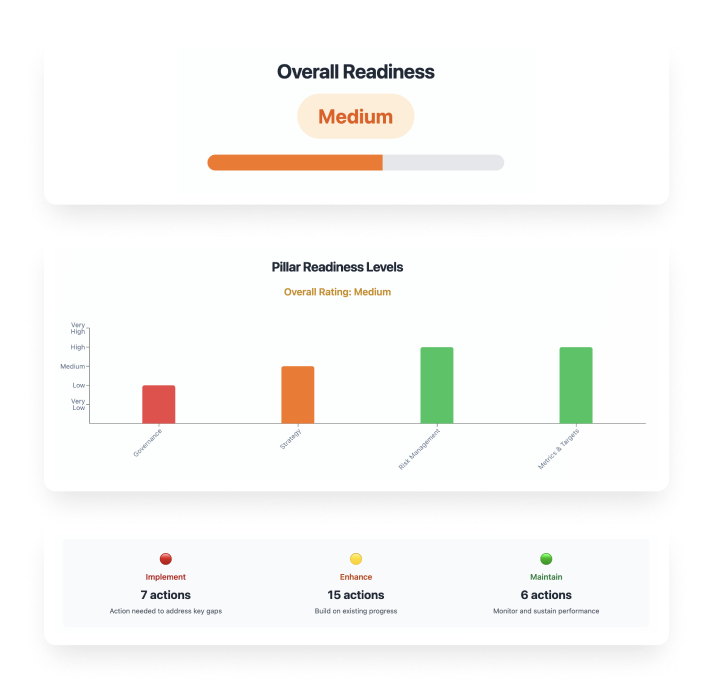
The specifics he named are useful for anyone planning ahead. Climate becomes an explicit standing item on enterprise risk management, ARC and board agendas. Emissions data gets consolidated more frequently through the year instead of almost entirely at year end. Capex and opex spend gets tagged as climate related at the transactional general ledger level, so the reporting data assembles itself rather than being reconstructed. And the Year 1 readiness gap analysis becomes the continuous improvement plan.
He was equally clear about the constraint. Compliance fatigue across the business is real, and the response is keeping the work targeted with clear accountability rather than asking more of everyone every year.
If your organisation is working out what Year 1 actually requires, book a 20 minute ASRS readiness conversation and we will walk you through the minimum viable compliance approach against your own reporting timeline.
Trace is a climate reporting platform specialising in ISSB and AASB standards, helping businesses navigate mandatory climate disclosure with clarity and confidence.


London - Sydney
.png)



.png)
.png)
.png)