
Group 2 and running late? What matters now, and what can wait?
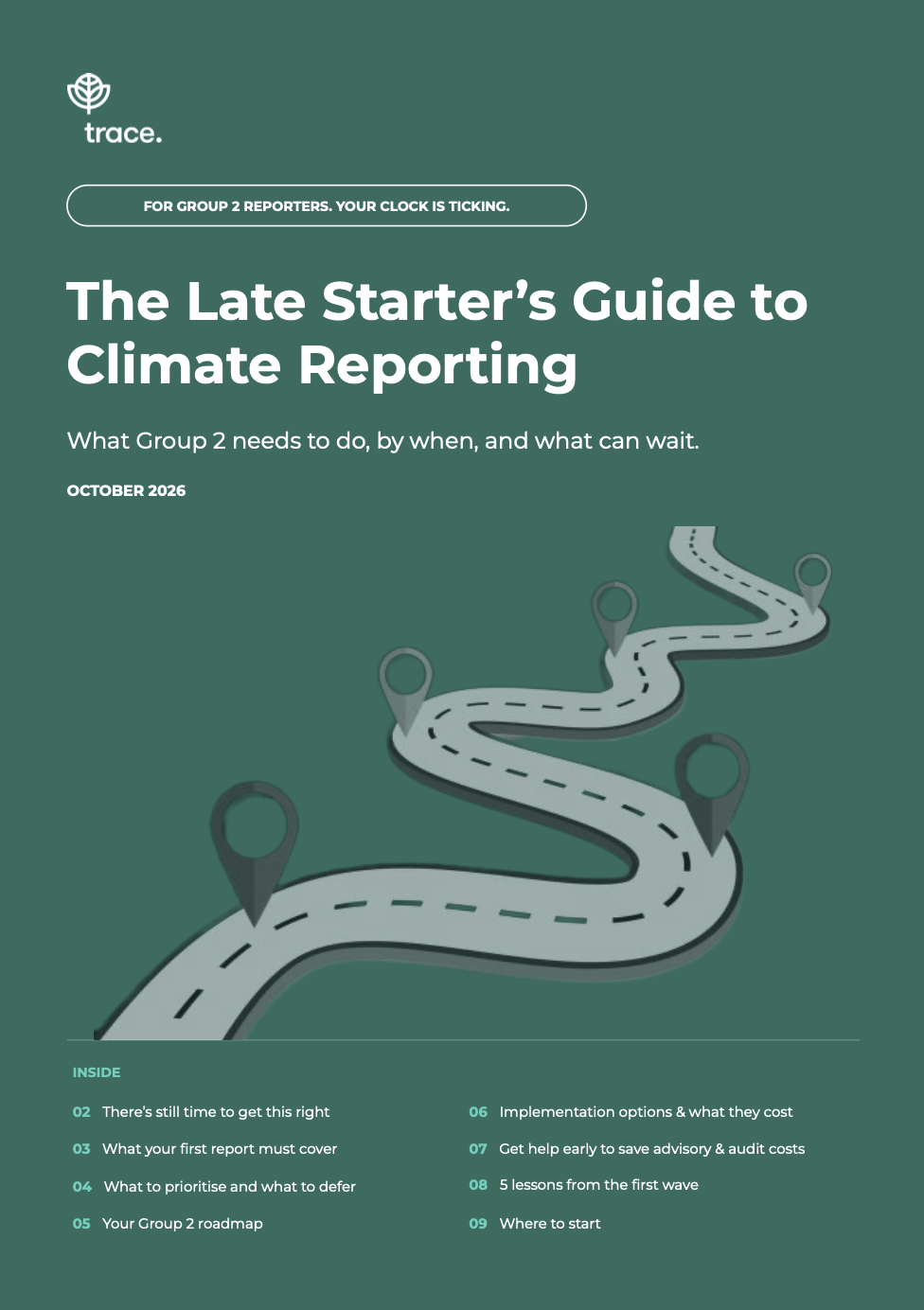
Your first reporting period under the Australian Sustainability Reporting Standards (ASRS) started on 1 July 2026, and for most Group 2 finance teams it's landed on an already full plate. This free guide shows what year one asks of you, a month-by-month plan to lodgement, and what can safely wait.
Get the ebook
AASB Australia's Mandatory Climate Reporting
Trusted by Mandatory Reporters







“Trace’s AI capabilities have significantly streamlined our data collection and validation processes, reducing manual effort and giving us greater confidence .”
CFO, Allied credit
“Trace’s AI capabilities have significantly streamlined our data collection and validation processes, reducing manual effort and giving us greater confidence .”
CFO, Allied credit

“We’ve worked with Trace for over 4 years and they’ve always given us confidence that our carbon data is accurate, audit-ready and aligned with evolving reporting standards.”
CEO, EnVATO

" Starting early [with the Trace platform] meant we avoided the scramble - saving time, money, and a lot of stress"
HEAD OF ESG, PADDY PALLIN
What's inside
Each section picks up where the last one finishes. You'll get what AASB S2 Climate-related Disclosures requires in year one, a dated plan, resourcing options and Group 1's lessons.
Where you stand, in four checklists
Work through governance, strategy, risk management, and metrics and targets, ticking off what's already in place. Each checklist shows what your auditor will review in year one, so you can see which gaps matter most. Whatever's left unticked becomes your to-do list.
What can't wait, and what can
Catching up is mostly about getting the order right. Governance, your Scope 1 and 2 data and an early conversation with your auditor can't slip any further. Scope 3, comparatives and detailed scenario modelling can wait or stay light in year one, because that relief is built into the standard.
A month-by-month plan to lodgement
A timeline from November 2026 to lodgement shows when to start each of six steps for a 30 June year end. Flags mark the latest you can start each one without putting your deadline at risk. Listed companies can also see where a half-year review is likely to fall.
Three ways to resource the work
See how building in house, a hybrid model and fully outsourcing compare on your team's hours and the chance of rework at audit. In the hybrid model your team owns the data and decisions, with AI where it helps and experts where it matters. A one-minute check helps you work out how much support you need.
What the first reporters wish they'd known
Trace prepared first-year climate reports for Group 1 companies and worked alongside their auditors. The same lessons kept coming up, and most of them aren't in the official guidance.
Governance has to run all year
Auditors expect board oversight of climate to have operated during the reporting period, with written responsibilities, agendas and minutes behind it, and it can't be pieced together at year end. If your period started on 1 July, put oversight in writing now and get climate on every board agenda.
Evidence is a job in itself
Group 1 companies found evidence requests were much bigger than they'd planned for, and they arrived at the busiest time of year. Auditors told us every number and judgement needs a documented source, method and sign-off. Build that trail as the work happens and walk your auditor through a dry run before year end.
Choosing your risks is the hardest part
Teams found it hard to pick the right climate risks and explain why some were material and others weren't. Auditors often saw risks that weren't connected to financial consequences, with materiality calls left undocumented. Because the risk assessment feeds your metrics and financial disclosures, starting it late squeezes everything that follows.
More drafts mean more review rounds
Well-prepared reporters needed one or two drafts, while those who went it alone needed five or six, each triggering a full re-review. Unassured sections still drew comments, because auditors read the whole report against the financial statements. Getting structure and evidence right early is what keeps the rounds down.
Written for the people
making ASRS decisions
This ebook is written at CFO grade, with enough detail to be genuinely useful to sustainability leads and risk teams. Not a primer. Not a sales deck.
Responsible for signing off on the disclosure. Needs to understand what auditors will scrutinise in year two, and where the financial integration gaps are in first-round disclosures.
Building the disclosure internally. Needs to understand what peers are doing on Scope 3, scenario analysis and materiality so the internal benchmark is calibrated correctly.
Needs to understand where governance documentation is falling short in first-round disclosures and what auditors are already flagging as areas for year-two improvement.
Accountable for climate risk oversight under AASB S2. Needs a clear picture of what comparable entities are disclosing and what the governance standard looks like in practice.
This ebook is particularly relevant if:
Your entity is likely to fall under ASRS Group 1, 2 or 3 (or you're not yet sure which group applies)
Your board or audit committee has asked about climate disclosure obligations for the first time
You're preparing a Group 2 first disclosure and want to learn from what Group 1 entities got right and wrong
You need to brief internal stakeholders on what AASB S2 actually requires versus what others are choosing to include
From ebook to
compliant disclosure.
01
Download the ebook
Understand what first reporters did. Where they focused, where they struggled, and what auditors are already signalling for year two.
Get it now02
Run your readiness assessment
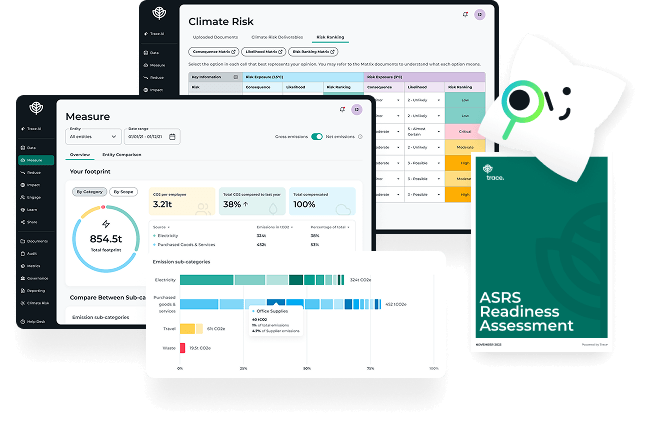
Trace maps your current data, governance and reporting position against ASRS requirements. You get a clear picture of where you are and a prioritised gap list.
See how it works03
Build your compliance roadmap
Trace turns your readiness assessment into a sequenced plan: what to do now, what to prepare for year two, and how to keep your board and audit committee informed throughout.
Book a call with our teamQuestions we hear most from ASRS teams
These are the questions Trace’s team hears most often from CFOs and sustainability leads starting their ASRS journey. The full ebook answers all of them in depth.


Your deadline is coming.
Start with the data.
Download the free ebook and see what Australia’s first AASB S2 reporters have already disclosed. Then talk to Trace about where you stand.


London - Sydney